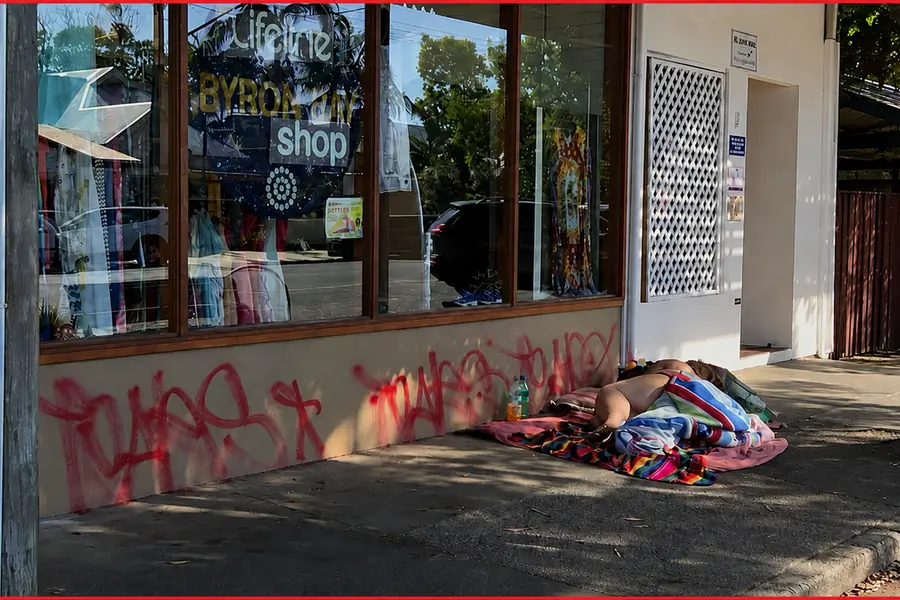
Byron Shire remains one of the worst-affected areas in NSW for rough sleeping, with the latest Street Count showing the region has recorded the second-highest number of people sleeping rough in the state.
The 2026 NSW Street Count figures, published by Byron Shire Council in May , recorded 245 people sleeping rough across Byron Shire, down from 291 in 2025. The Shire was second only to the City of Sydney, which recorded 296 people sleeping rough.
As neighbouring Ballina Shire sits directly beside Byron Shire, its result is also notable. The 2026 NSW Statewide Street Count recorded 25 people sleeping rough in Ballina Shire, down from 64 in 2025. While that is a significant decrease, the Street Count only captures people sleeping rough at the time of the survey and does not include hidden homelessness such as couch surfing, overcrowding or temporary accommodation.
While Byron Shire’s number has fallen, local leaders say the crisis is far from over.
Byron Shire Mayor Sarah Ndiaye said any reduction was good news and reflected the NSW Government’s investment in assertive outreach services in the Shire over the past two years. She said specialist outreach workers, working alongside Council’s Public Space Liaison Officers, were helping build trust with people sleeping rough and connect them with support.
But the Mayor warned the lack of housing options continued to limit progress. Council says social housing makes up just 1.8 per cent of Byron Shire’s total housing stock, less than half the state and national average of about four per cent. There is currently no public housing in the Shire.
Mayor Ndiaye described the result as “optimistic, but cautious”, saying Byron Shire continues to face a dire shortage of crisis, temporary, social and affordable housing.
A wider picture beyond the Street Count
The Street Count measures rough sleeping, but a newly released local report shows homelessness in Byron Shire extends beyond those sleeping in parks, streets, cars, tents and public spaces.
1000 Voices Byron Shire was a community-led project focused on listening to the ideas, experiences and perspectives of community members to help solve homelessness. It was part of the Ending Rough Sleeping Collaboration Byron Shire, with more than 700 community members responding to the survey between July and September 2025.
The 1000 Voices – What We Heard Summary Report analysed 709 responses and more than 12,000 data points, drawing together lived experiences, observations, concerns, ideas and hopes about homelessness in the Shire.
The report found homelessness in Byron Shire is highly visible and deeply felt, affecting individuals, families, public spaces, services and everyday community life.
Eighty per cent of responders reported seeing visible homelessness, including people sleeping rough in streets, parks, reserves, vehicles, tents and under bridges. Byron Bay, Mullumbimby and Brunswick Heads were mentioned most often.
The report also highlighted the hidden side of homelessness, with 18 per cent of responders speaking about couch surfing, overcrowded or unsafe housing and temporary accommodation.
More than one in five responders, 21 per cent, shared personal or lived experience of homelessness. People described instability, stigma, emotional distress and impacts on wellbeing, including living in cars, relying on friends or family, struggling to access crisis accommodation and being displaced from the region.
Community members identified a wide range of causes, including family and domestic violence, mental health challenges, substance use, unemployment, lack of support, population growth, the 2022 floods and the COVID-19 pandemic.
The housing crisis was also named as a major driver, with responders pointing to rising rents and house prices, a shortage of affordable homes, limited land, short-term rental accommodation and cost-of-living pressures as issues forcing locals, including employed residents, into housing insecurity.
A key message from 1000 Voices is that many locals do not see homelessness as an individual failure. Responders described it as inhumane, complex and systemic, with housing often referred to as a human right.
The report found 35 per cent of responders felt hopeless or believed the problem was getting worse, while 22 per cent saw homelessness as widespread. Sixteen per cent expressed particular concern for women, children and low-income earners.
A lack of government intervention or political will was identified as a key barrier by 46 per cent of responders. Local homelessness services were also described as underfunded, reliant on goodwill and volunteers, affected by workforce burnout and fragmented.
Despite the scale of the issue, the report points to strong community concern and a desire to act. Fifty-three per cent of responders said they saw a role for themselves in everyday actions, including volunteering, donating, lobbying, storytelling, providing housing or land, offering jobs and directly supporting people and services.
Housing was central to almost all visions for the future. Forty-eight per cent of responders said housing is critical to ending homelessness, with calls for more crisis and transitional housing, safe spaces for people living in vehicles or camping, more social housing, tiny homes, ecovillages and better use of existing buildings and land.
The local work is being driven through the Ending Rough Sleeping Collaboration Byron Shire, a community-led initiative aiming to end rough sleeping by 2034. The collaboration brings together more than 30 organisations, services, government agencies and community partners, focusing on the root causes of homelessness and centring the voices of people with lived and living experience.
Its Shared Agenda for Change includes priorities such as safe, secure and affordable homes, greater community awareness, bold government leadership and reform, and person-centred, trauma-informed support.
The Byron work also forms part of the wider Northern Rivers Zero project, which began in 2024 and aims to end rough sleeping across the Northern Rivers by 2034 by making it rare, brief and non-recurring. The project will eventually cover Tweed, Byron, Clarence Valley, Lismore, Ballina, Richmond Valley and Kyogle.
The 1000 Voices report concludes that homelessness in Byron Shire is deeply felt, widely witnessed and understood as a shared responsibility. While the community sees major barriers, it also sees hope, strong local care and clear possibilities for change.
As Byron and Ballina shires continue to be known nationally for their beaches, tourism and lifestyle, the latest figures show another reality sitting alongside that image: hundreds of people without safe and secure housing, and communities calling for long-term action.
Community members who want to learn more, read the reports or follow the next phase of local action can visit Byron Shire Council’s 1000 Voices Byron Shire page or the Ending Rough Sleeping Collaboration Byron Shire page.
Read more local news from The Coast Report