
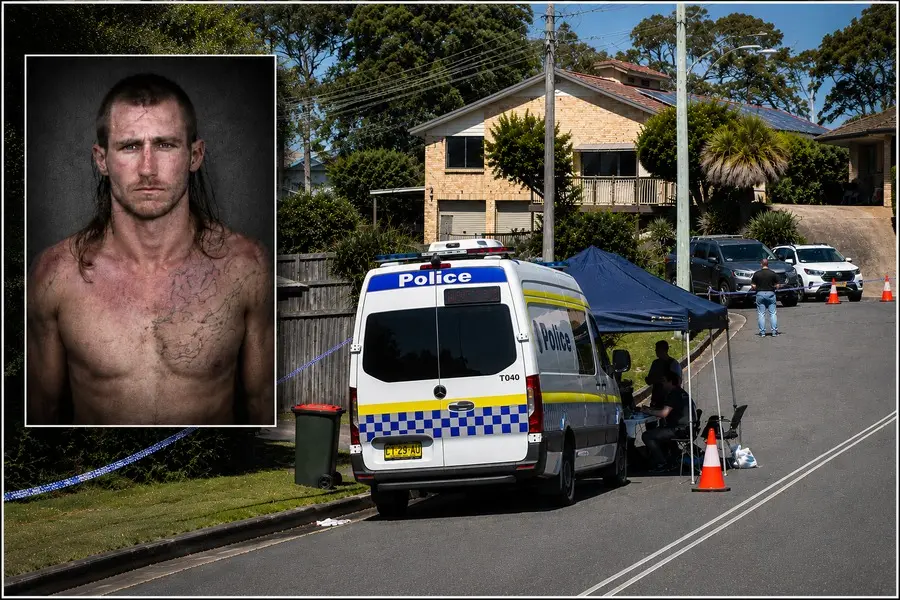
An alleged citizen’s arrest in Bray Park has resulted in two Northern Rivers men facing manslaughter charges after a wanted man died two days later, reigniting debate about community safety and how much force a resident can legally use.
The events unfolded before sunrise on April 8 in Bellevue Avenue, Bray Park, near Murwillumbah.
Emergency services were called to a home at about 4.30am following reports of a man acting suspiciously.
Michael Harding, 42, and his neighbour Luke Manning, 31, confronted 34-year-old Vaughn Scott Cummings allegedly armed with baseball bats before an altercation followed.
When emergency services arrived, Cummings was being detained on a footpath and was suffering serious head injuries. He was treated at the scene before being taken to Gold Coast Hospital in a critical condition.
Several people at the scene spoke with investigators and assisted with the inquiry.
Cummings died in hospital two days later, on April 10, prompting the establishment of Strike Force Raison to investigate the confrontation and the circumstances surrounding his death.
At the time, Cummings was wanted on 12 outstanding arrest warrants.
On July 2, Harding and Manning attended Tweed Heads Police Station, where each was charged with manslaughter.
Sandi Williams, 43, whom Newscorp reported is the wife of Manning was charged with hindering the discovery of evidence relating to a serious indictable offence.
All three were granted conditional bail requiring them to report to Murwillumbah police station once a week.
A familiar face across the Tweed
Cummings was well known across Murwillumbah, Uki and Tweed Heads.
His name and photograph had appeared in wanted alerts and on local social-media pages as authorities attempted to locate him. Residents had also been warned not to approach him.
Many Murwillumbah residents associated his name with break-and-enters, stolen vehicles, petty offending and police pursuits, although community accounts should not be treated as a complete record of proven convictions.
His high-profile wanted status may help explain why Harding and Manning allegedly recognised him. It did not, however, place him outside the protection of the law.
What happened to Vaughn Cummings during the alleged citizen’s arrest?
The confrontation has widely been described as an alleged citizen’s arrest, but many of the facts that will determine the case remain unknown.
It has not been publicly established whether Cummings attempted to enter a property or was armed when the confrontation began.
What is publicly known is that he had been seen acting suspiciously and was later found seriously injured while being detained on a footpath.
Detective Sergeant Gary Sheehan said concerned residents had gone outside to confront Cummings and that an altercation followed.
The precise actions attributed to Harding and Manning, the full medical evidence and the prosecution case against each man have not yet been publicly outlined.
Those details will be central as the matter progresses through the courts.
What can a resident legally do?
NSW law allows an ordinary person to arrest someone without a warrant in limited circumstances.
A private citizen may arrest a person who is committing an offence, has just committed one, or has committed a serious indictable offence for which they have not yet been tried.
The detained person must then be handed over to the proper authorities as soon as reasonably practicable.
Any force used must be no more than reasonably necessary to make the arrest or prevent the person from escaping.
In simple terms, the law may allow someone to detain another person. It does not give them the right to punish them.
Cummings’s wanted status may have led residents to believe intervention was justified, but it did not create an unrestricted right to use force.
Equally, the decision to charge Harding and Manning does not mean either man is guilty.
The prosecution must establish what each man allegedly did and whether those actions caused or substantially contributed to Cummings’s death.
A community divided
The case has divided opinion across the Northern Rivers.
Some residents see Harding and Manning as neighbours who stepped in after authorities had spent months trying to locate Cummings.
Others argue that a person’s criminal history, reputation or outstanding warrants do not remove their legal rights.
That tension sits at the heart of the case.
Cummings’s wanted status did not authorise unlawful violence. At the same time, the manslaughter charges do not prove Harding or Manning unlawfully caused his death.
Those questions must be determined through evidence tested in court, not through social-media commentary, rumours or assumptions.
The wider home-defence debate
The case has also renewed debate about home invasions, break-ins, repeat offending and what residents should do when they believe a suspected offender is near their home.
Under NSW law, a person may rely on self-defence if they believed their actions were necessary to defend themselves or another person, protect property or prevent criminal trespass, and their response was reasonable in the circumstances as they perceived them.
However, the law does not provide an unrestricted right to use force. A person cannot intentionally or recklessly cause death solely to protect property or prevent trespass.
Supporters of stronger home-defence laws, often described as Castle-Law protections, argue householders should have greater legal certainty when responding to an intruder.
Critics warn broader protections could encourage people to pursue suspects or use serious force when no immediate threat exists.
Whether that debate applies directly to the Bray Park case remains unclear.
The publicly confirmed confrontation occurred on or near a footpath. It has not been established that Cummings was attempting to enter a home or carrying a weapon.
The central question for the court will be whether the force allegedly used to detain Cummings remained within the lawful limits of an arrest or crossed into criminal conduct that caused his death.
Michael Harding, Luke Manning and Sandi Williams are due to appear before Tweed Heads Local Court on July 27.
All allegations remain before the court and have not been proven.
Read more Northern Rivers news from The Coast Report.